
An Incredibly Easy Method That Works For All
10 Apr 2021
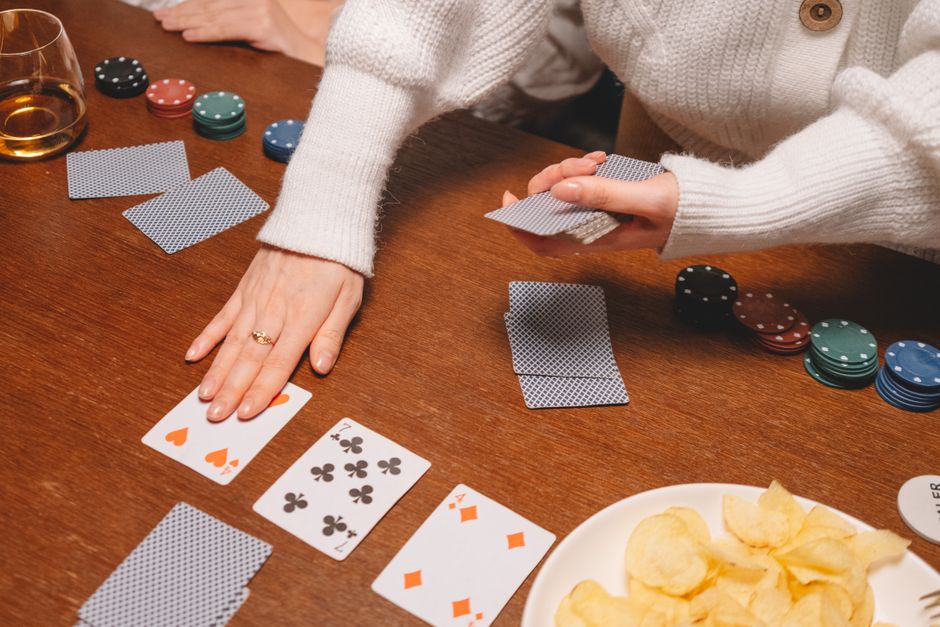
Every gambler has heard the phrase "the house always wins." It's true in the long run, but that little caveat — in the long run — is where all the drama, strategy, and heartbreak of iGaming lives. The gap between the mathematical certainty of a casino's edge and the short-term chaos of actual results is called variance, and understanding it is the single biggest difference between players who last and players who donate their bankroll within an hour.
Let's dig into what variance really means across slots, table games, poker and sports betting, and how you can use that knowledge to play smarter.
Variance is simply the statistical spread of outcomes around an expected value. A game can have a negative expected value for you and still pay out handsomely on any given night. A game can have a positive expected value and still bankrupt you over a weekend. Confusing short-term results with long-term expectation is the most expensive mistake in gambling.
Take a simple example. A fair coin flip with even money has zero house edge. Your expected value is neutral. Flip it 10 times and you might win 8. Flip it 10,000 times and you'll hover extremely close to 5,000 wins. That drift toward the mean is the law of large numbers, and every casino floor on Earth is built on it.
Here's a concrete data point worth burning into memory: a standard American roulette wheel has a 5.26% house edge. A European wheel with a single zero cuts that to 2.70%. Over 100 spins the difference feels random. Over 10,000 spins, playing American instead of European costs the average bettor roughly an extra 2.5% of all money wagered. If you're betting $10 a spin, that's about $2,500 in additional expected losses across 10,000 spins. The wheel doesn't feel different. The math absolutely is. Readers looking for specifics may like สล็อตเว็บตรง.
Modern video slots don't just have a house edge — they have a volatility profile, and this matters more to your session experience than the RTP printed in the help screen.
Two slots can both advertise 96% RTP and feel completely different. A 96% RTP low-volatility game might return 40% of your wagers as small wins distributed evenly. A 96% RTP high-volatility game might return 70% of your wagers through rare monster hits. Same average, wildly different ride.
Practical tip: match volatility to your bankroll and goal. Want a long, cheap session with drinks and company? Low volatility. Chasing a headline jackpot on a small stake? High volatility with the full understanding that most sessions end in a bust.
Poker is different because you're not playing against the house — you're playing against other players while the rake eats the pot. This makes it the only major iGaming vertical where a skilled player can have a genuinely positive expected value.
But variance in poker is brutal. A winning cash game player with a 5 big blinds per 100 hands win rate can easily post a 30,000-hand losing streak. Online grinders routinely play 50,000 to 100,000 hands per month precisely because variance is a function of sample size. If you judge your skill on a 500-hand session, you'll tilt yourself into the poorhouse.
Tournament poker has the highest variance of any mainstream poker format. In a 1,000-player tournament, the top 15% usually cash. The best players in the world enter events with a 20-30% ROI in the long run, but they can go 20 tournaments without a final table. If you're playing MTTs on a $200 bankroll, you need 50-100 buy-ins to absorb the swings, not five.
Bettors obsess over their win rate. Professional bettors obsess over closing line value (CLV) — whether the odds they took were better than the odds available at kickoff. If you consistently beat the closing line, you will be profitable over thousands of bets even if any given month is a loser.
Consider this: a bettor with a 52% win rate against standard -110 lines is profitable. A bettor with a 55% win rate against -120 lines might not be. The odds matter more than the win rate. A 55% strike rate sounds impressive until you realize the implied probability of -120 is 54.5%. You'd be winning barely above break-even.
Every experienced iGaming player eventually learns the same lesson: your bankroll strategy matters as much as your game selection. No edge survives reckless sizing.
A few rules that hold up across every vertical:
And here's the uncomfortable truth: no amount of bankroll management turns a negative EV game positive. It just extends your playtime and reduces the chance of ruin inside any single session. Slots, roulette and most casino games are entertainment products with a built-in cost. Treat them that way and you'll never be disappointed by the math.
The house edge doesn't reveal itself spin by spin. It slowly, quietly grinds you down until one day you look at your deposits versus your withdrawals and do the arithmetic you'd been avoiding.
That doesn't mean iGaming is a fool's game. It means that if you're going to play, play with eyes open. Choose European roulette over American. Pick slots whose volatility matches your budget. Track your poker results in tens of thousands of hands, not tens. Bet sports markets where you actually have an information edge, and let CLV tell you the truth about your ability.
Variance is what makes gambling exciting. The house edge is what makes it a business. Knowing the difference is what makes you a player instead of a mark.

Imcore Written for people who value the details, and want honest guidance they can trust.

April 25, 2019 at 10:46 am
Take in the iconic skyline and visit the neighbourhood hangouts that you've only ever seen on TV. Take in the iconic skyline and visit the neighbourhood.


Want to be notified when we launch a new template or an udpate. Just sign up and we'll send you a notification by email.


Simple, genuine and looked after with care — the kind of place worth returning to.

Soldman Kell
April 25, 2019 at 10:46 am
Take in the iconic skyline and visit the neighbourhood hangouts that you've only ever seen on TV. Take in the iconic skyline and visit the neighbourhood.